17
Mon, Nov
86 New Articles

Artificial intelligence (AI) is reshaping the legal profession at an unprecedented pace, offering efficiencies and capabilities that were scarcely imaginable a decade ago. For law firms in smaller jurisdictions like Slovenia, this transformation presents both unique challenges and opportunities. The adoption of AI tools, while promising enhanced efficiency and competitiveness, also raises questions about the sustainability of small firms, the potential for consolidation, and the evolution of training for junior lawyers.

In The Corner Office, we ask Managing Partners at law firms across Central and Eastern Europe about their backgrounds, strategies, and responsibilities. This time around, we asked: What is the ratio between business development activities and billable hours for Partners within your team, on average?

As we pass the halfway mark of 2025, we asked Partners across the region to identify their hottest practice so far this year, explain the driver behind that surge, and share whether they expect the momentum to continue. Czech Republic-based PRK Partners Associate Partner & Head of AI and Digital Practice Daniel Vejsada, Georgia-based PwC Legal Director and Head of Legal Practice Vano Gogelia, Ukraine-based Avellum Partner and Head of Defense and Miltech Andriy Romanchuk, Bulgaria-based Schoenherr Office Managing Partner Alexandra Doytchinova, and Serbia-based Kinstellar Special Counsel and Co-head of the firm-wide Competition & State Aid service line Olga Sipka give us their take.

In our Looking In series, we talk to Partners from outside CEE who are keeping an eye on the region (and often pop up in our deal ticker) to learn how they perceive CEE markets and their evolution. For this issue, we sat down with Elvinger Hoss Partner Anna Hermelinski-Ayache and Counsel Jean-Bernard Spinoit.

As Ukraine grapples with geopolitical upheaval and economic uncertainty, private dispute-resolution mechanisms have emerged as vital alternatives to an overburdened court system. Kinstellar Partner Olexander Martinenko and Managing Associate Danylo Volkovetskyi explore recent legislative reforms, market fragmentation, wartime influences on institutional uptake, and the shifting preferences of businesses and state enterprises toward arbitration and mediation.

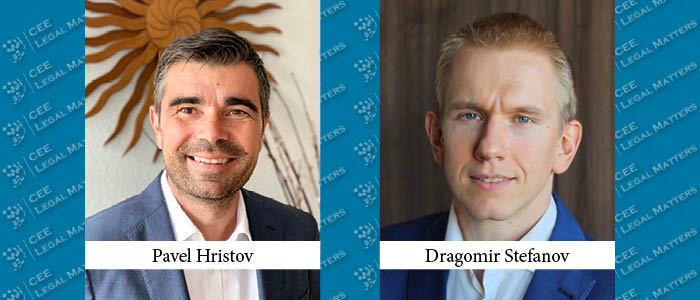
With years of political instability in Bulgaria having stalled the appointment of key regulatory officials, Hristov & Partners Partner Dragomir Stefanov, PPG Lawyers Managing Partner Irena Georgieva, and Kambourov & Partners Managing Partner Yavor Kambourov discuss how it impacted the functioning of regulatory bodies.

With 25 years of SEE Legal behind him and over four decades in the legal profession, Boyanov & Co Managing Partner Borislav Boyanov reflects on how the idea for the regional alliance first took shape, from early conversations with peers to building a network across borders.

Turkiye’s defense industry is undergoing a major shift, with accelerated domestic innovation, exports, and growing geopolitical relevance. Bezen & Partners Partner Aykut Bakirci, AECO Law Partner Emre Atayilmaz, Balcioglu Selcuk Eymirlioglu Ardiyok Keki Attorney Partnership Partner Kagan Dora, and Cakmak Partner Zeynep Cakmak discuss the sector’s transformation.

Nova Broadcasting Group Chief Legal and Compliance Officer Elena Velkova reflects on her transition from advisory to in-house, building a specialized legal team, navigating technology-driven change and regulatory challenges, and assuming a more strategic role in the media industry.

An in-depth look at Angel Rizov of Kambourov & Partners, covering his career path, education, and top projects as a lawyer as well as a few insights about him as a manager at work and as a person outside the office.

An in-depth look at Inanc Akalin of Boden Law covering his career path, education, and top projects as a lawyer as well as a few insights about him as a manager at work and as a person outside the office.

The year 2025 brings significant changes to value-added tax (VAT), with a fundamental impact on the real estate market, property developers, and private individuals alike. The major amendment to the VAT Act, which came into effect on January 1, 2025, represents one of the most comprehensive VAT reforms in recent years. The effectiveness of the new rules related to real estate and land transactions has been delayed to July 2025. The changes aim to address practical issues under the previous legal framework and to simplify the interpretation and application of VAT in relation to such transactions.

Recently, due to the current economic climate in Turkiye, we have observed that the Ministry of Treasury and Finance has been making efforts to minimize tax loss and evasion, enhance voluntary compliance, and thereby increase tax collection. As part of this broader fiscal strategy, tax audits have increased significantly, spearheaded by both the Tax Inspection Board and the Revenue Administration’s provincial units. In addition, tax authorities are increasingly vigilant, introducing a range of proactive and preventive audit mechanisms designed to increase voluntary compliance without necessarily resorting to lengthy and burdensome audits.

In 2026, Lithuania will implement a major tax reform initiated by the Ministry of Finance, marking the most significant fiscal change since the 2008 economic crisis. The reform aims to ensure fiscal stability, strengthen national security funding, and improve fairness in the tax system, sparking intense debates across society and the business community.

As of January 1, 2024, foreign companies without a physical presence in North Macedonia must appoint a tax representative when performing taxable transactions with local non-taxpayers. This requirement, established under the Law on Value Added Tax of North Macedonia (VAT Law), stands regardless of whether the general VAT registration threshold of MKD 2 million is achieved.

In the context of the Republic of Moldova’s commitments under the Association Agreement concluded with the European Union in 2014 and its designation as an EU candidate country granted in 2022, the national legal framework is undergoing substantial reform. A large part of the legislative transposition agenda relates to environmental protection, which includes the adoption and implementation of numerous regulatory acts at the national level.

Page 1 of 2