















































In The Spotlight

Dorda, working with Kirkland & Ellis, has advised Verdane on its partnership with Austrian sports platform Eversports. Schoenherr advised Eversports.



More Featured News




Subscribe Now


Wolf Theiss has advised XPartners Samhallsbyggnad on its acquisition of Aqvila and its Hungarian subsidiary Aqvila Consult Hungary.
Dorda, working with Kirkland & Ellis, has advised Verdane on its partnership with Austrian sports platform Eversports. Schoenherr advised Eversports.

SSW, working with K&L Gates Volckrick Luxembourg, has advised a group of minority shareholders of Zabka Group on issues related to the public offering of Zabka. Reportedly, Greenberg Traurig, Freshfields Bruckhaus Deringer, and Elvinger Hoss Prussen advised the shareholders of Zabka as well. Baker McKenzie and Allen Overy Shearman Sterling reportedly advised the managers.
Clifford Chance has advised Ceskoslovenska Obchodni Banka on the financing of OAMP Infrastructure and OAMP Distribution.

Deloitte Legal-affiliated firm Reff & Associates has advised investment fund Sarmis Capital on the acquisition of a majority stake in paper producer MG-Tec Industry.
Schoenherr has advised IndieBI on raising equity capital through two investment rounds which included undisclosed industry investors.
CMS, working with Norton Rose Fulbright, has advised UGT Renewables on a partnership agreement with Serbia's state-owned power utility Elektroprivreda Srbije and the Ministry of Mining and Energy for the development and construction of new solar power plants and battery storage facilities in Serbia. Akin Gump reportedly advised the Government of the Republic of Serbia.
Zamfirescu Racoti Vasile & Partners and Clifford Chance have successfully represented Premier Energy in a first-instance court dispute against Azomures over a natural gas supply contract.

Cytowski & Partners has advised Gdansk-based Vidoc Security Labs on its USD 2.4 million seed financing round with Palo Alto-based Pebblebed. Kondracki Celej, working with Gunderson Dettmer, advised Pebblebed.
Schoenherr, working with sole practitioner Mihaela Aliman, has advised Renovatio on the sale of renewable energy production assets with a capacity of approximately 18 megawatts to OMV Petrom.

Kocian Solc Balastik has advised Green Gas DPB on a set of long-term contracts for the supply and off-take of coal mine methane.

Kyriakides Georgopoulos has advised Aviation Capital Group and Castlelake on the sale, transfer, and lease novation of one Airbus A320-214 aircraft under lease to Greek airline Sky Express, from ACG to Castlelake.
BBH Managing Partner has moved in-house and joined Kaprain.

Turunc has promoted Beste Yildizili Ergul and Naz Esen to Managing Associates and appointed them to Co-Head of Employment and Co-Head of Corporate Advisory teams, respectively.

Wolf Theiss has opened a new office in Brussels under the joint leadership of Partners Anca Jurcovan, Guenter Bauer, Robert Wagner, and Stefan Wartinger.
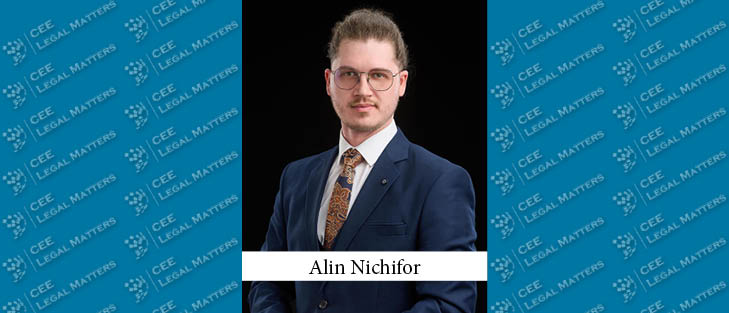
Alin Nichifor has joined Buju Stanciu & Associates as a Partner.
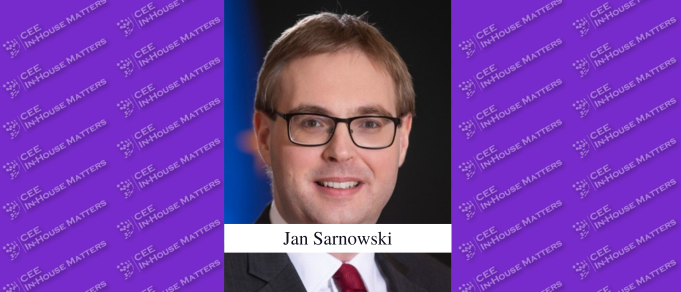
Former Kuke CFO Jan Sarnowski has joined B2RLaw as the new Head of Tax Practice.
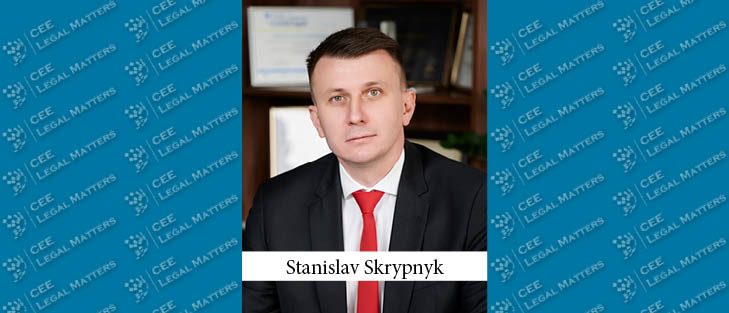
Former Misechko & Partners Partner Stanislav Skrypnyk has joined Hillmont Partners as Counsel in the firm's Dispute Resolution practice.

Former Dentons Partner Timea Bana has joined Kinstellar as a Partner and new head of the local TMT service line and sector.
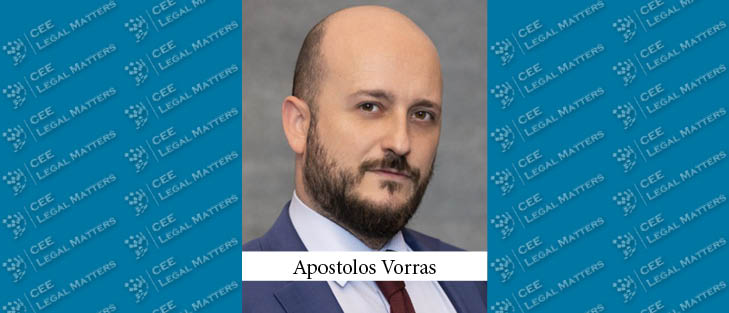
Former Deloitte Legal Partner Apostolos Vorras has joined Koutalidis as Partner and head of the firm's Digital Law practice.

Former Kinstellar Ukraine Partners Margarita Karpenko, Alla Kozachenko, Galyna Zagorodniuk, and Illya Sverdlov have established Imagine Lawyers.

Former Clifford Chance Counsel Aneta Disman has joined Wikov as its Chief Legal Officer in the Czech Republic.

Former Mars Wrigley Head of Legal for Poland Magdalena Dedynska has become the company's new Senior Counsel for Central Europe.

Former Baker McKenzie Senior Associate Katerina Schenkova has joined Thyssenkrupp as its new Regional Compliance Officer.

The new Waste Management Law of Montenegro (“the Law”), which came into force on April 12, 2024, represents a step further towards harmonizing Montenegrin legislation with the acquis communautaire, namely key European Union (“EU”) directives in the area of waste management.

AI is increasingly revolutionizing the way businesses handle recruitment, hiring, management and employee monitoring etc. AI solutions are already adept at personalizing employee experiences, such as benefits and training, streamlining HR processes throughout the employment lifecycle, boosting efficiency and significantly reducing administrative burdens. Additionally, AI provides critical workforce insights, facilitating data-driven decision-making and management. However, these advancements also bring potential risks related to discrimination, protection of privacy, and other fundamental rights that employers must carefully manage.

It will soon be twenty years since Regulation 261[1] came into force, which introduced an unprecedented level of protection for air passengers and was supposed to provide much greater protection in cases of denied boarding, cancellation, or long delays. So, has the (in)famous Regulation 261 served its purpose?

The Law on Management of Companies Owned by the Republic of Serbia (hereinafter: the Law) came into force on 16 September 2024 in full. This Law was adopted in accordance with the recommendations that the Republic of Serbia received from the International Monetary Fund in order to corporatization, improve management and change the legal form of enterprises in the Republic of Serbia.
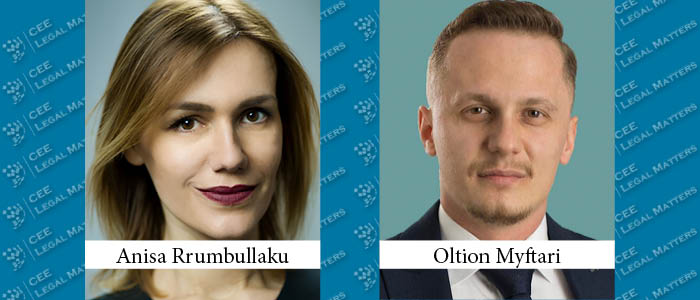
Under Albanian law, employment intermediary activities are carried out by two types of agencies. The first type consists of “Recruitment Agencies,” which facilitate the hiring of individuals to work for a third party. The second type includes “Temporary Employment Agencies” (TEAs), which recruit and hire individuals for temporary assignments with host companies while keeping them on the agency’s payroll.

The Czech Class Actions Act[1] became effective on 1 July 2024. Previous articles have provided an overview of key aspects of the new legislation and subjects of these proceedings. This part will focus on the challenges related to the publicity of class actions and explore ways in which companies, as defendants, can protect themselves from negative impacts.

The long-standing dispute between Illumina/GRAIL and the European Commission has now ended. The Court of Justice has set definitive limits on the broad interpretation of Article 22 of Council Regulation No. 139/2004 on the control of concentrations between undertakings.

Recently, the Parliament of Montenegro has amended the labour regulations by adopting two amendments to the Labour Law in August and September 2024, and by adopting the amendments to the Law on Contributions for Mandatory Social Insurance in September 2024.

The Government of the Republic of Serbia has proposed amendments to the Law on Public Notaries ("Official Gazette of RS", no. 31/2011, 85/2012, 19/2013, 55/2014 - other law, 93/2014 - other law, 121/ 2014, 6/2015 and 106/2015) with the purpose of introducing the obligation to solemnize monetary loan agreements between natural persons in the amount of EUR 10,000 and higher.

Startups are newly established companies usually founded by entrepreneurs who develop a product, service, or business model with the aim of solving a specific problem or addressing a gap in the market. These companies usually start with limited revenue, and they are looking after angel investors, venture capitalists or especially allocated funds for startups.

The amendments to the Bulgarian Public Health Act (PHA), introduced on 8 October 2024, are aimed at modernising the healthcare system, enhancing data management and improving patient care. They prioritise the transition to electronic health records (EHR), regulate telemedicine, and introduce a digital scheduling system for medical appointments. This article provides a high-level overview of the amendments.
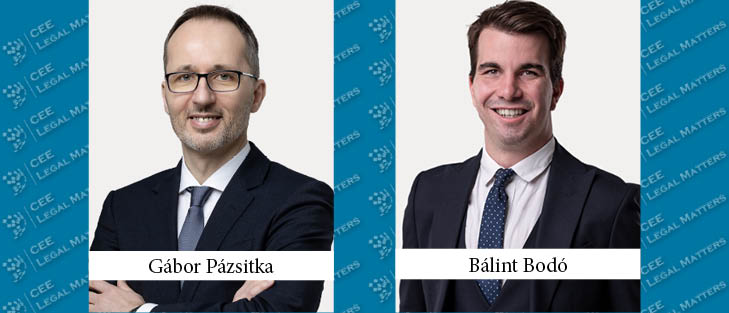
Convertible loans have emerged as a pivotal financial instrument for start-ups navigating the challenging terrain of early-stage funding (pre-seed and seed), also called angel investment. These loans are a hybrid of debt and equity financing, offering a unique solution for companies that are not yet ready for a formal valuation or are seeking to bridge funding gaps between capital-raising rounds.

JŠK advised PRE Group on its acquisition of 100% stake in solar power plant supplier SolidSun.
The Reverse Share Split at a ratio of 10:1 to reclassify the company's share capital was resolved at the Annual General Meeting on 14 June 2024.
The IMMOFINANZ Group acquired a further approx. 38% of S IMMO shares from CPI Property Group SA for a purchase price of around EUR 608.5 million.
Drakopoulos is pleased to announce the launch of its new Data and Digital practice, dedicated to providing comprehensive legal solutions to clients navigating the increasingly complex landscape of data protection, digital transformation, AI, cybersecurity and emerging technologies.
The Montenegrin Law on Business Organizations prohibits the return of contributions to shareholders. But is capital reduction with simultaneous payment to shareholders permissible? This article explores the legal ambiguities and practical challenges arising from this question.
The ITR Tax Awards recognise the best tax consultants and tax lawyers every year. bpv Huegel was awarded twice this year.
RTPR has assisted the shareholders of 123FormBuilder – 212 Regional Fund II, Catalyst Romania, Florin Cornianu and Adrian Gheara – in relation to the sale of the company to American group Kiteworks.
Oliver Koppany will be joining Jalsovszky as Foreign Legal Counsel from September, focusing on US-Hungarian business connections.
Paul Pfeifenberger (36) specialises in real estate and has been with bpv Huegel since 2015.
RTPR has assisted OX2 in relation to the sale of a 99.2 MW onshore wind project located in the Eastern part of Romania to Nala Renewables, a joint venture between IFM Investors and Trafigura.
RTPR has assisted private equity fund Innova Capital in relation to the sale of Optical Investment Group to EssilorLuxottica, a global leader in the design, manufacture and distribution of ophthalmic lenses, frames and sunglasses.
RTPR has assisted Vectr Holdings, through its subsidiary Vectr Realty Holdings, in relation to the indirect acquisition of 100% stake in the company that owns The Landmark from funds managed by Revetas Capital and affiliates of Cerberus Capital Management.










Our Latest Issue


DLA Piper Partner Marta Frackowiak discusses the current slowdown in the Polish market, driven by geopolitical uncertainty, economic challenges, and hesitance among investors, while also highlighting key trends in M&A, employment, and regional expansion efforts by Polish businesses.


DLA Piper Partner Marta Frackowiak discusses the current slowdown in the Polish market, driven by geopolitical uncertainty, economic challenges, and hesitance among investors, while also highlighting key trends in M&A, employment, and regional expansion efforts by Polish businesses.
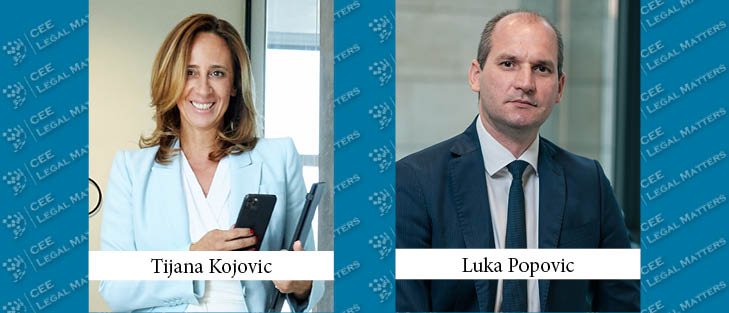

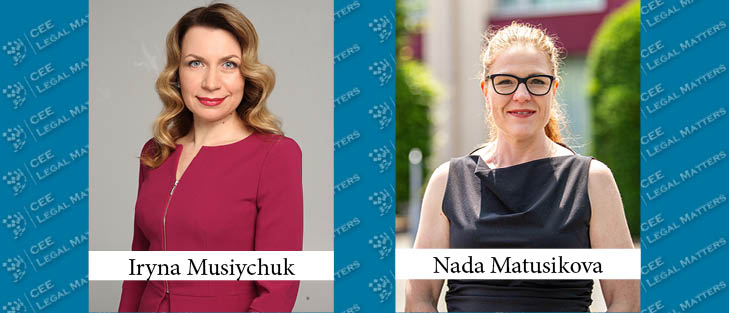
In the Inside Track, General Counsels across CEE share the nuances of their roles, challenges, and strategies for success. As summer is a time to unwind, we asked: With summer here, what is your one favorite yearly activity to disconnect and switch off?



On November 23, CEE Legal Matters reported that Cobalt had advised BaltCap Latvia Venture Capital Fund and funds managed by Imprimatur Capital, together with other shareholders, on the sale of Blue Bridge Technologies to Everfield. CEE In-House Matters spoke with Henning Schreiber, Head of Acquisitions at Everfield, to learn more about the acquisition.