CMS, working with Clifford Chance, has advised UniCredit Group and Zagrebacka Banka on the EUR 550 million debt refinancing granted to Fortenova Grupa. King & Spalding reportedly advised Fortenova Grupa.
 CEE Legal Matters
In-depth coverage of the news and newsmakers that shape Europe's emerging markets
CEE Legal Matters
In-depth coverage of the news and newsmakers that shape Europe's emerging markets
CMS, working with Clifford Chance, has advised UniCredit Group and Zagrebacka Banka on the EUR 550 million debt refinancing granted to Fortenova Grupa. King & Spalding reportedly advised Fortenova Grupa.

Gecic Law has successfully represented Arena Channels Group, alongside BH Telecom and Mtel Banja Luka, in an antitrust dispute before the Court of Bosnia and Herzegovina.

In The Corner Office, we ask Managing Partners at law firms across Central and Eastern Europe about their backgrounds, strategies, and responsibilities. This time around, we asked: For 2025, what is the one sector or industry in the country that shows the most promise for growth, and why?
Big law firms can coast on boring slogans. They’ve got the clout, the infrastructure, and the impressive list of past clients to do the talking. But if you’re a smaller firm and your website sounds like everyone else’s, you are disappearing into the beige background of legal marketing noise.

Bosnia and Herzegovina is experiencing a notable shift in its investment climate, marked by a rise in foreign direct investment and a more dynamic economic landscape, according to Maric & Co Managing Partner Nebojsa Maric. While the country’s complex political system and heavy regulatory environment have historically made investors cautious, the interest in the areas of manufacturing, renewable energy, and infrastructure is growing.
The European Accessibility Act (EAA), approved in 2019, takes effect on June 28, 2025. The Act requires a wide range of products and services – such as consumer electronics, vending machines, websites, and mobile apps – to meet accessibility standards for people with disabilities.
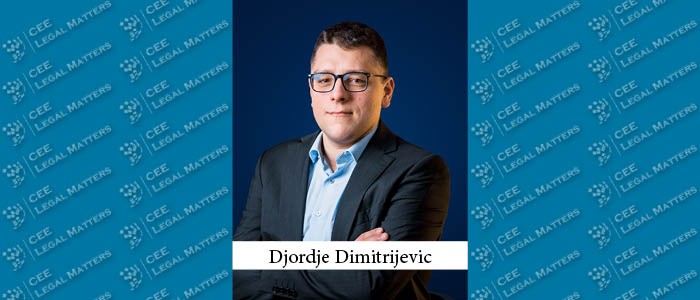
Conduction of business activities is not possible without possessing a bank account. Business entities[1] are required to open bank accounts, manage all funds through these accounts, and make all payments via these accounts[2], with banks being the only authorized institutions to open and maintain bank accounts[3].

On the evening of April 1, 2025, the Deal of the Year Awards Banquet brought together, under the same roof, over 200 top-tier lawyers from Central and Eastern Europe's leading law firms and General Counsel from across the region in Prague.

In The Corner Office, we ask Managing Partners at law firms across Central and Eastern Europe about their backgrounds, strategies, and responsibilities. This time around we asked: If you have a formal partnership track, how do you handle lawyers on it who do NOT end up living up to the requirements to make a Partner?

Former iQR Asset Management Partner and Head of Legal and Compliance Dino Aganovic, Wiener Osiguranje Vienna Insurance Group Head Of Legal and Secretary Davor Majstorovic, and MTEL in-house counsel Vladimir Bjekic have joined forces to launch AMB Legal Group in Bosnia & Herzegovina.
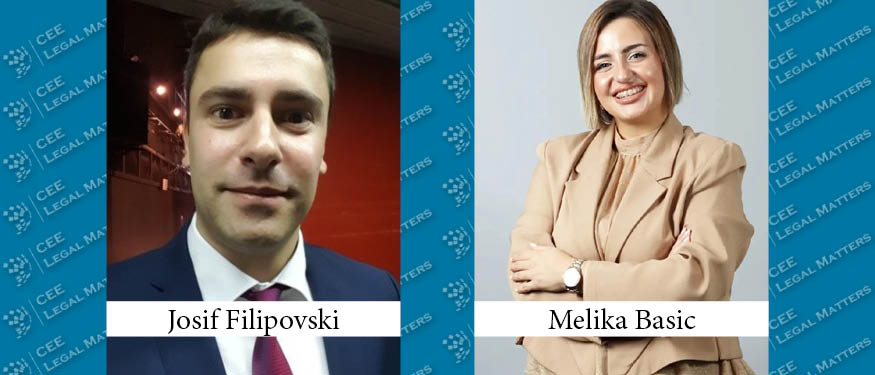
BDK Advokati has entered North Macedonia via a cooperation agreement with a local qualified independent Attorney at Law Josif Filipovski. Moreover, the firm has expanded its presence in Bosnia & Herzegovina with the addition of Melika Basic.
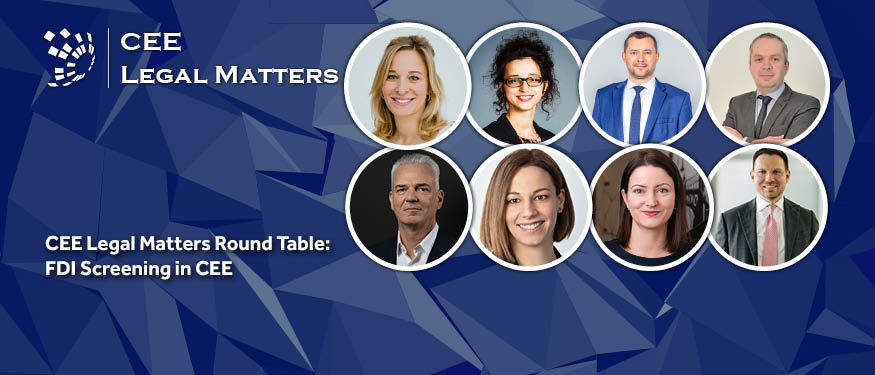
On November 7, 2024, M&A experts from Austria, Bosnia & Herzegovina, Croatia, Greece, Hungary, Moldova, Romania, and Ukraine participated in a virtual round table moderated by CEE Legal Matters Managing Editor Radu Cotarcea to discuss the FDI screening regimes in their country and key developments in the area on the horizon.
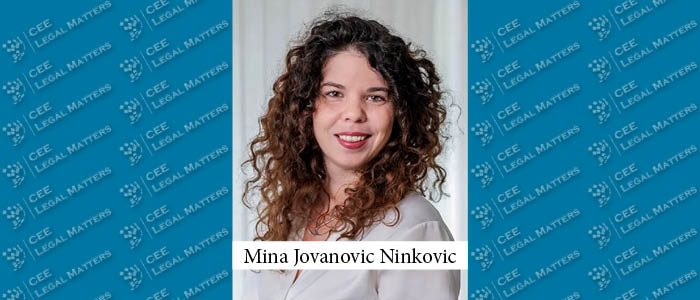
Unlike many neighboring countries, the Trademark Law of Bosnia and Herzegovina explicitly addresses bad faith trademark applications as both relative grounds for refusal and as a basis for contesting a trademark through court proceedings. In other words, trademark applications filed contrary to the principles of good faith and fair dealing can be challenged either through an opposition before the Institute for Intellectual Property or by filing a lawsuit before the competent court. While this dual system theoretically provides two distinct avenues of recourse, practical experience shows that both mechanisms tend to merge into a single, judicially driven process. Below, we analyze the key lessons drawn from recent case law concerning bad faith trademark filings.
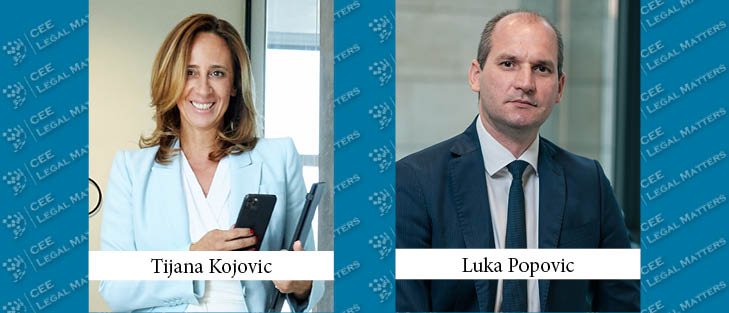
On 19 September 2024, BDK Advokati celebrated 20 years since its establishment. BDK Advokati Managing Partner Tijana Kojovic and Senior Partner and Head of the Montenegrin office Luka Popovic reflect on this milestone and discuss the journey of the firm, its evolution, achievements, and aspirations for the future.
ESG has long been considered a niche concept, especially in Bosnia and Herzegovina. However, over time the picture has completely changed and the market has not only mastered the meaning of ESG, but a large number of companies have adapted their business to all or rather most of environmental, social, and governance principles.

Former Maric & Co Partner Slaven Dizdar has left the firm to launch Dizdar Law Office in Sarajevo.

Ibrahimovic & Co has advised Bimal on real estate plot acquisition via a special arrangement with the Government of Brcko District, Bosnia and Herzegovina.
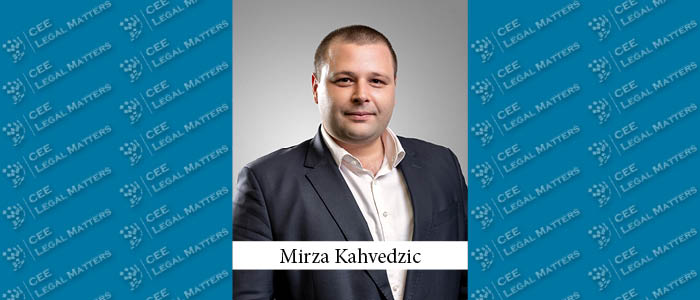
EOS Matrix Bosnia and Herzegovina Executive Director for Legal Affairs Mirza Kahvedzic discusses his career path leading up to his current role, how his legal team operates, and current challenges faced due to slow court proceedings.