Albania is preparing to amend its competition framework to better address anti-competitive practices and align with EU standards. A draft law introducing changes to the Competition Law has been presented but has not yet been discussed in Parliament. The proposed amendments would grant the Albanian Competition Authority (ACA) broader powers, particularly to scrutinize so-called “killer acquisitions,” and would clarify rules on abuse of dominant position and coordinated practices. For Albania’s business and legal community, these changes signal a more vigilant enforcement environment while also offering greater legal certainty. In addition, new regulations are expected to be adopted to further approximate Albanian law to EU competition rules.
Ukraine: What the New FDI Screening Law Means for Investors
Ukraine is once again preparing to introduce a formal screening regime for FDI – a move that has reignited debate among investors, lawyers, and policymakers. In late September 2025, Parliament registered the first draft law on FDI screening, which quickly drew significant attention and mixed reactions. Just two weeks later, however, an alternative draft was submitted, offering a noticeably different, and potentially more balanced, vision for how Ukraine should monitor foreign investments.
Romania: Amendments to Competition Law and New FDI Screening Guidelines
Following a series of legislative amendments in 2024, the Romanian competition law framework remained relatively stable in 2025. Although other proposals are in the pipeline, the Romanian Competition Council (RCC) appears to have focused more in the first half of this year on enforcing its existing tools rather than on further refining or expanding them. There are, nevertheless, two notable exceptions with deep implications for companies: (i) the amendment of legal professional privilege during RCC dawn raids and (ii) the adoption of guidelines related to Foreign Direct Investment (FDI) screening.
Turkiye: Inside the TCA’s Conditional Approval of the Tofas-Stellantis Deal
The Turkish Competition Board (Board), by its decision dated April 18, 2025 (Decision), conditionally approved Tofas Turk Otomobil Fabrikasi A.S.’s (Tofas) acquisition of Stellantis Otomotiv Pazarlama A.S. (Stellantis TR), subject to commitments. The Transaction, carried out by Tofas under the joint control of Koc Holding A.S. (Koc Holding) and Stellantis N.V., combined several prominent automotive brands, making it highly significant for competition dynamics, production capacity, and distribution structures in Turkiye.
New Challenges in Greenfield Commercial Development
Due to its geographical and geopolitical characteristics, Hungary has become an attractive destination for industrial, commercial, and logistics developments in recent years. The government is also encouraging large developments with a number of measures, and remarkable industrial investments have been realized with government support. These investments require growing supplier and storage capacity, and making development sites in favorable locations (uncultivated lands with appropriate zoning, available infrastructure, and traffic approach) is expensive.
Hungary’s Dual Foreign Investment Screening Regime
The stoppage of Alfoldi Tej’s acquisition and a short-lived amendment to the FDI laws establishing the right of first refusal for the Hungarian State attracted much attention to Hungary’s far too wide FDI regime. Let’s shed light on what it really means.
Hungary’s Renewable Energy Sector – 2025 Legal and Regulatory Developments
The key legislative changes in 2025 impacting the Hungarian renewable energy sector include:
2025: Breakthrough Year – Access, Incentives, Clinical Research Dynamics, and Diagnostics Centralization
Early in the year, the government introduced a new actor into named-patient reimbursement: the Batthyany-Strattmann Laszlo Foundation for Healing, a public benefit foundation empowered to finance medicinal products and medical devices that, although professionally accepted, fell outside social insurance reimbursement. Prior to this change, individualized access decisions sat solely with the National Health Insurance Fund. The foundation’s establishment diversified funding sources, helped alleviate administrative pressure, and introduced discretionary decision-making guided by considerations of life protection, social responsibility, and budget availability.
AI and Product Liability: What Hungarian Businesses Need to Know
As AI becomes an integral part of everyday technology, product liability law is evolving to address the new risks it introduces. The new EU Product Liability Directive (2024/2853) marks a fundamental shift in how defective products – including software, AI systems, and digital components – are regulated. Hungary is now preparing to align its national rules with this modernized regime. A legislative proposal to amend the Civil Code is currently before Parliament, and its adoption will significantly broaden liability exposure for businesses involved in developing, modifying, or distributing AI-powered products.
New Rules, New Tools: The Introduction of AMLA and Hungary’s Drive for Enhanced AML Enforcement
The European Union has made a significant move to reshape its anti-money laundering (AML) framework by creating the Authority for Anti-Money Laundering and Countering the Financing of Terrorism (AMLA), based in Frankfurt. This new institution is set to standardize and improve AML compliance throughout the EU, eliminating fragmented oversight and establishing a consistent supervisory system.
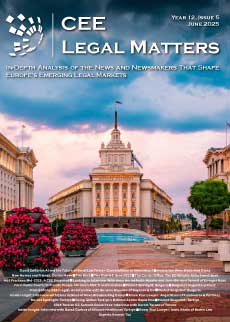
The Debrief: November 2025
In The Debrief, our Practice Leaders across CEE share updates on recent and upcoming legislation, consider the impact of recent court decisions, showcase landmark projects, and keep our readers apprised of the latest developments impacting their respective practice areas.
Guest Editorial: Poland – CEE’s Center of Gravity
In a region that has learned to live with uncertainty, Poland stands out for something refreshingly simple: results. A recent Bloomberg column by Matthew A. Winkler captured it perfectly: Poland’s GDP is about USD 915 billion and keeps compounding. Bloomberg calculates that household consumption has surged 125% since the UK voted to leave the EU in 2016; the zloty leads among 23 most-traded emerging-market currencies; Polish government bonds top Europe with over 30% total return; and the Warsaw Stock Exchange ranks among the world’s best performers so far this year. These are facts.
Looking In: Veronica Dragalin of Jones Day
In our Looking In series, we talk to Partners from outside CEE who are keeping an eye on the region to learn how they perceive CEE markets and their evolution. For this issue, we reached out to new Jones Day Partner Veronica Dragalin, who recently joined the firm’s Washington office after working as the Chief Anti-Corruption Prosecutor in Moldova since 2022.
The Corner Office: The Time Sink
In The Corner Office, we ask Managing Partners at law firms across Central and Eastern Europe about their backgrounds, strategies, and responsibilities. This time around, we asked: What is the one most time-consuming administrative task for you as a Managing Partner, and what, if anything, have you done to try to minimize time spent on it?
CEE Arbitration Hubs in Focus
CEE is increasingly on the radar for businesses looking for efficient and cost-effective dispute resolution. Tuca Zbarcea & Asociatii Partner Cornel Popa, PRK Partners Associate Partner Michal Sylla, and Avellum Partner Oleksii Maslov discuss which hubs are leading the way, the challenges they face, and the opportunities shaping the region’s arbitration landscape.
One Market, Multiple Systems: Making Deals Work in Bosnia and Herzegovina
Bosnia and Herzegovina’s cross-hatched legal map covering the Federation of Bosnia and Herzegovina, Republika Srpska, and the Brcko District forces counsel to marry country-wide coordination with entity-specific nuance. DMB Partners Managing Partner Dina Durakovic, Dimitrijevic & Partners Senior Partner Stevan Dimitrijevic, and IA Law Firm Managing Partner Adi Ibrahimovic walk us through how they staff matters, steer incorporation choices, pick governing law and forums, and keep closings on schedule despite shifting administrative sands.
Bosnia’s Deal Machine: Renewables, Reform, Results
As Bosnia and Herzegovina advances EU-alignment and energy transition priorities, mandates have broadened across compliance, projects, and cross-border deals. Maric & Co Partner Bojana Bosnjak-London and Sijercic & Partners Senior Partner Nihad Sijercic discuss where the work is coming from, who’s investing, what’s slowing things down, and how the outlook is shaping up.
Shaping the Georgian Legal Market: How Law Firms Have Evolved in Georgia
For the first time, CEE Legal Matters turns its spotlight on Georgia, examining a market that has changed dramatically over the past three decades. From the early days of small local offices to today’s mix of international and domestic players, we look at what has shaped Georgia’s legal landscape.