
Wolf Theiss, working with Clifford Chance, has advised Supernova Invest on the issuance of EUR 550 million senior notes due 2030. Linklaters and Schoenherr reportedly advised the bank syndicate involved.
 CEE Legal Matters
In-depth coverage of the news and newsmakers that shape Europe's emerging markets
CEE Legal Matters
In-depth coverage of the news and newsmakers that shape Europe's emerging markets
Wolf Theiss, working with Clifford Chance, has advised Supernova Invest on the issuance of EUR 550 million senior notes due 2030. Linklaters and Schoenherr reportedly advised the bank syndicate involved.

With the European Parliament recently approving a new draft FDI regulation, significant changes are on the horizon across the EU, and Slovakia is no exception. According to Wolf Theiss Partner Bruno Stefanik, the anticipated updates will impact Slovakia’s national legislation, reshape existing FDI procedures, and offer a timely opportunity to address practical challenges identified since the country’s FDI regime took effect in 2023.

Nestor Nestor Diculescu Kingston Petersen has advised PetStar Group on the reacquisition of sole control over its core packaging manufacturing subsidiaries and a EUR 50 million financing round. Wolf Thiess advised UniCredit as the lender.

Wolf Theiss, working with Linklaters, has advised Raiffeisen Bank on the issuance of EUR 300 million 4.191% 6NC5 green non-preferred senior eligible notes due 2031. White & Case reportedly advised the bank syndicate.

Wolf Theiss, working with Maqs Advokatbyra, has advised New Wave Group on the acquisition of Cotton Classics Handels.

Schoenherr has advised OMV Aktiengesellschaft on the issuance of EUR 750 million in perpetual, subordinated hybrid notes with J.P. Morgan and MUFG acting as the structuring agents and joint global coordinators and BofA Securities, Erste Group, ING, LBBW, and SMBC as the joint bookrunners. Wolf Theiss, working with the White & Case Frankfurt office, advised the bookrunners.
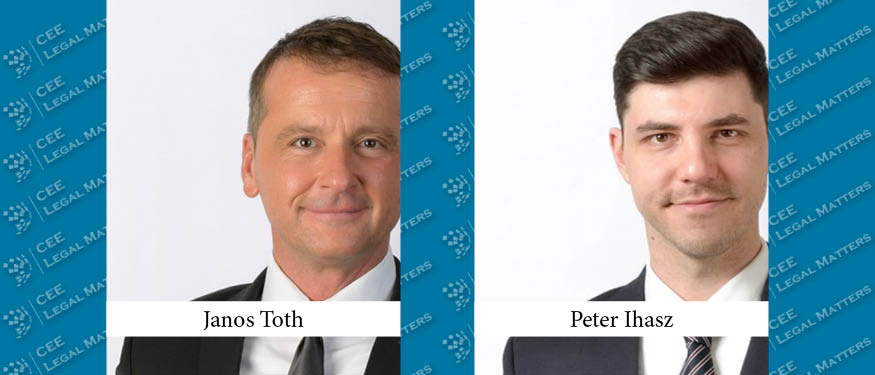
Hungary’s specific domestic foreign direct investment (FDI) screening regime (affecting both ongoing and future cases) has been updated to include extended applicable deadlines and the possibility of multiple rounds of extensions. Additionally, the existing pre-emption mechanism – originally intended for transactions targeting solar developments – has been extended to cover all transactions blocked by the competent minister’s decision.

BPV Huegel has advised CPI Europe Group on the sale of the Vienna Marriott Hotel to a joint venture between Evientro and Landfair European Dislocated Opportunities. Binder Groesswang and Saxinger advised the buyers. DLA Piper and Wolf Theiss reportedly advised the buyers as well.

Wolf Theiss has advised Aurelius on its acquisition of Winkelmann Automotive Poland.

Wolf Theiss has advised Winegg Realitaeten subsidiary CWR Realitaeten on the sale of Engerth 173-175 Entwicklungs, the property owner and lessor of the Voco Vienna Prater hotel, to Nowu Hospitality. Hasch und Partner reportedly advised Nowu Hospitality.

In The Debrief, our Practice Leaders across CEE share updates on recent and upcoming legislation, consider the impact of recent court decisions, showcase landmark projects, and keep our readers apprised of the latest developments impacting their respective practice areas.

The Polish Ministry of Family, Labor, and Social Policy has prepared an amendment to the Labor Code, which in particular amends the existing provisions on mobbing. The new provisions are expected to enter into force in 2025. The aim of the amendment is to remove ambiguities in the current provisions, simplify procedures for pursuing claims, and increase the responsibility of employers for negative phenomena in the work environment, including mobbing.

Wolf Theiss has advised Sekyra Group on the sale of the Opatov II residential project in Prague to Dostupne Bydleni Ceske Sporitelny and Kooperativa Pojistovna. Wilsons reportedly advised the buyers.

Filip & Company has advised NextUp Solutions shareholders Roxana Epure and Pierre-Yves Morlet on the sale of the company to Symfonia. Wolf Theiss advised Symfonia.

Wolf Theiss has advised Sofia South Ring Mall on the EUR 79 million cross-border refinancing of its flagship retail property in Bulgaria. Dentons and Boyanov & Co advised the lenders – Eurobank Bulgaria, Eurobank Greece, and Eurobank Luxembourg Private Bank.

On 26 May 2025, the Hungarian Government published Government Decree 110/2025. (V. 26.) (the Decree), introducing a mandatory centralised inventory management regime for medical consumables used by public healthcare institutions. The Decree amends the regulatory framework under:

Wolf Theiss has advised Raiffeisenbank Austria on its recent tender offer for outstanding notes and the successful issuance of new EUR 300 million ordinary senior eligible notes. Linklaters reportedly advised an international banking consortium that participated in the offering.

Wolf Theiss has advised Erste Group Bank and Banca Comerciala Romana on the EUR 21 million financing facility extended to Danube Capital Partners for the Day Tower office building in Bucharest. Stratulat Albuescu advised Danube Capital Partners.

With over 360 lawyers in 13 countries, over 80% of the firm’s work involves cross-border representation of international clients. We have concentrated our energies on a unique part of the world: the complex, fast-developing markets of the CEE/SEE region. Through our international network of offices, we work closely with our clients to develop innovate solutions that integrate legal, financial, and business know-how.
Wolf Theiss provides fully integrated corporate services in mergers and acquisitions, private equity, real estate, banking and finance, tax and insurance, employment law, competition law, energy law, privatisation, restructuring, public procurement and litigation. At Wolf Theiss, we measure our success by the success of our clients. We align our goals with yours to ensure that your needs are being met in even the most complex of cross-border matters. This means that we know how to listen to you and help you use the assets you already have while finding opportunities.
Firm's website: